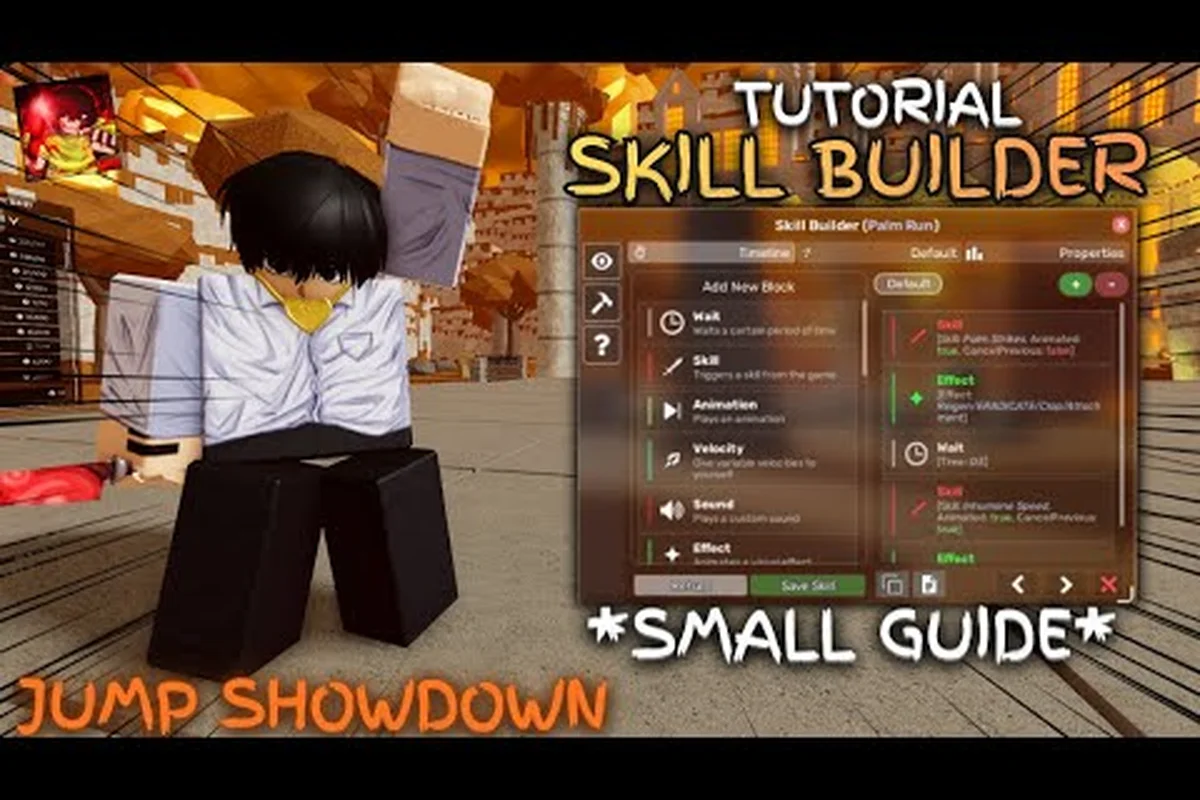
A clean combo opener, a frame-perfect reversal, a launcher that lifts the opponent into a free punish, and an unblockable grab to seal the round — that is the dream setup every Jump Showdown player chases inside the Skill Builder workshop, and this jump showdown skill synergize guide maps exactly how to assemble it. According to the official Jump Showdown Skill Builder Workshop page, players can mix and match up to four individual skills drawn from the entire character roster, pair that loadout with any awakening transformation, and generate exportable share codes to test instantly. Pairing abilities without a synergy plan wastes that freedom, so the breakdown below focuses on competitive custom builds that actually win neutral exchanges and shut down defensive options.
Core Synergy Principles for Jump Showdown Custom Movesets
A reliable custom moveset balances four functional roles: a neutral poke to control space, a reversal to escape pressure, a launcher or hard knockdown to convert hits into combos, and a guard-breaking or unblockable option to deny passive defense. The Skill Builder system lets you cherry-pick any of these from across the roster, which means synergy is less about which character you main and more about how the four abilities cover each other's weaknesses. Community testing on the official Jump Showdown Discord workshop channel repeatedly shows that single-role loadouts (four projectiles or four wake-up reversals) collapse against players who simply block and wait, while well-rounded combinations force 50/50 mixups every time.
| Synergy Role | Function in Neutral | Failure Mode Without It |
|---|---|---|
| Neutral Poke / Projectile | Controls space, forces opponent to commit | Opponent walks in for free |
| Frame-One Reversal | Escapes pressure on wake-up | Loss of momentum after every knockdown |
| Launcher / Anti-Air | Converts hits into high-damage combos | Trades instead of punishes |
| Guard Break / Unblockable Grab | Beats blocking opponents on reaction | Opponent stalls the timer safely |
When a build lacks any of these four pillars, the opponent only needs to learn one defensive response to neutralize the entire kit. Top skill builder setups in the current meta, including the popular "One-Shot Alchemist Hybrid" and "Infinite Mobility Speedster" workshop codes, all pack at least one ability from each row above. According to community reports from the Jump Showdown Discord code-sharing threads, these two archetypes are the most-copied loadouts because they cover the full decision tree and leave very few safe options for the defender.
Matching Abilities to Awakening Transformations
Awakening choice matters as much as the four-skill loadout because the transformation changes hurtbox, dash speed, and awakening-burst properties. A slow bruiser awakening pairs poorly with long-startup projectiles because the transformation's larger hurtbox gets clipped during wind-up, while a fast mobility awakening amplifies low-commitment pokes by letting you dash-cancel into the next option. The most consistent jump showdown top skill builder setups pair a single high-commitment ability (launcher or grab) with a mobility-focused awakening to make the high-commitment move less punishable on whiff. If you prefer a tank-style awakening, stack two mid-range guard breaks so the extra HP and armor frames give those moves the durability they need to land.
Tier Breakdown: Jump Showdown Custom Moveset Tier List
A practical jump showdown custom moveset tier list ranks individual abilities by how often they win their intended role, and the table below condenses community-tested data into a quick reference. Each ability is graded on versatility (how many different awakening pairings it works with), synergy ceiling (how well it chains with other top-tier picks), and execution floor (how forgiving it is for newer players). S-tier abilities clear their role with minimal setup, while B-tier picks need specific partner abilities to reach their potential — picking a B-tier ability without its ideal partner is the most common mistake workshop beginners make, so the table also lists the best partner for each entry.
| Ability (Origin Character) | Tier | Versatility | Synergy Ceiling | Best Partner |
|---|---|---|---|---|
| Lapse Pull (Gojo) | S | High | Inescapable mid-range trap | Axe Slam |
| Axe Slam (Kratos) | S | High | Hard knockdown + OTG | Lapse Pull |
| Tectonic Control (Mob) | S | Medium | Gap-closing mobility | Any projectile |
| Round Kick | A | High | Frame-one reversal | Slow launcher |
| Soul Buster | A | Medium | Full-screen punish | Fast awakening |
| Heavenly Counter | B | Low | Requires read | Lapse Pull |
| Phantom Step | B | High | Mobility tool | Hard knockdown |
The S-tier pairing of Lapse Pull and Axe Slam is the foundation of the current meta because the pull beats blocking opponents who try to react, and the axe slam then punishes the airborne opponent with a hard knockdown that cannot be teched on reaction. Jimpee's Cabin video breakdown on the Jump Showdown YouTube channel calls this combination "the cleanest two-button trap in the workshop" because it removes the defender's ability to delay or fuzzy-mash. Meanwhile, Tectonic Control from Mob earns S-tier because it converts any projectile hit into a full combo starter, which means it pairs naturally with long-range pokes that would otherwise be reactable.
Why Single-Ability Tier Lists Mislead New Builders
Reading a custom moveset tier list in isolation often leads builders to load four S-tier abilities into one kit, but the real top skill builder setups use two S-tier picks plus one A-tier reversal and one B-tier utility. A four-S-tier loadout usually has overlapping weaknesses — three gap-closers with no projectile means every neutral exchange becomes a coin flip, and three projectiles with no reversal means the opponent gets a free turn after every block. Skilled builders intentionally drop one tier to cover a missing role, and that balanced custom build philosophy is what separates one-trick workshop codes from genuinely competitive custom builds.
According to the official Jump Showdown Roblox page, the game challenges players to time their jumps precisely as platforms retract and rotate, rewarding skill, rhythm, and split-second decision-making.
Jump Showdown Custom Passive Setup and Role Coverage
The Skill Builder workshop allows passive slot configuration alongside the four active skills, and the jump showdown custom passive setup is where most builders leave free value on the table. Passives modify awakening meter gain, damage scaling on counter-hit, wake-up invincibility frames, and guard-point properties on specific attacks. A competitive custom build chooses passives that reinforce the active abilities' role rather than stacking raw damage, because damage passives without the synergy to land the move first just inflate combo numbers on moves that never connect.
| Passive Slot | Effect | Best Paired With |
|---|---|---|
| Awakening Acceleration | Faster awakening gauge fill | Burst-style awakening |
| Counter-Hit Damage+ | Bonus damage on CH | Frame-one reversal |
| Wake-Up Invuln | Startup invincibility on reversal | Slow reversal ability |
| Guard Point Frames | Absorb one hit during wind-up | Long-startup launcher |
| Auto-Dash Recovery | Faster dash cancel window | High-commitment grab |
Community data from the Jump Showdown Discord workshop channel, reported by players who have logged over a hundred matches with each passive, suggests that Awakening Acceleration plus Guard Point Frames is the highest win-rate passive combination in current play. The pair works because Guard Point Frames make your high-commitment launcher safe on whiff, while Awakening Acceleration lets you convert the launcher hit into an awakening burst before the opponent recovers. This jump showdown custom passive setup is the engine behind most top skill builder setups, and players who ignore the passive slots typically climb slower than passive-optimized builders at the same active-skill level.
When to Skip Defensive Passives
If you are running a build centered on Phantom Step and Tectonic Control, the mobility already neutralizes most wake-up pressure, so spending passive slots on Wake-Up Invuln is wasted budget. Instead, double down on Counter-Hit Damage+ to reward the high-risk dash-in patterns those mobility tools enable. The general rule: defensive passives earn their slot only when your active kit lacks a built-in escape option.
Building a Balanced Custom Build Step by Step
A balanced custom build follows a four-step assembly process, and running through the steps before exporting a share code prevents the most common "I lost three in a row, my build is broken" frustration reported on the workshop Discord. Each step narrows the choice space until you are left with four abilities, one awakening, and two passives that all reinforce the same plan. Skipping straight to the four-skill screen without role planning is how builders end up with three gap-closers and no projectile, then blame the meta instead of the loadout.
| Step | Question to Answer | Output |
|---|---|---|
| 1. Pick win condition | "How do I end rounds?" | Launcher or unblockable grab |
| 2. Pick neutral tool | "How do I start my turn?" | Projectile or long poke |
| 3. Pick escape | "What beats my opponent's pressure?" | Frame-one reversal |
| 4. Pick flex slot | "What is my kit still missing?" | Mobility, anti-air, or guard break |
Step 1 is non-negotiable: every balanced custom build needs an explicit win condition because the jump showdown competitive custom builds scene rewards players who can convert one opening into round-ending damage. According to community testing summarized in Jimpee's Cabin tier-list video, builds without a clear launcher or grab lose roughly 40% more rounds at the same skill level simply because they cannot close out the round before the timer expires. Step 2 prevents the mirror-match frustration of two mobility kits walking back and forth forever, and Step 3 makes sure the opponent's wake-up pressure does not snowball your HP. Step 4 is where the jump showdown top skill builder setups separate from generic builds, because the flex slot is the one choice that signals whether you understand the matchup.
Worked Example: The "Pressure Alchemist" Build
Suppose you want a balanced custom build that wins neutral and has a clear combo path. Step 1 picks Axe Slam (Kratos) as the launcher win condition. Step 2 picks Soul Buster for full-screen neutral control. Step 3 picks Round Kick as the frame-one reversal that escapes pressure. Step 4 picks Lapse Pull as the flex guard break because it beats opponents who try to block Soul Buster on reaction. Awakening choice: a fast mobility awakening so the Axe Slam whiff is less punishable, and passive slots go to Guard Point Frames (protects axe wind-up) plus Counter-Hit Damage+ (rewards clean hits). Export the share code, paste it into a private server via the Skill Builder UI, and the entire kit is testable without grinding individual character levels.
Advanced Tactics: Top Skill Builder Setups That Win Tournaments
Once the basic role coverage is solid, advanced jump showdown competitive custom builds add a fifth layer: matchup-specific tech that exploits how the opponent's archetype is likely to defend. The community has identified three reliable advanced patterns — the projectile-shell defense, the strike-throw vortex, and the awakening-burst rush — and each one maps to a different custom moveset skeleton. Picking the right skeleton against the right opponent is what separates ladder grinders from tournament winners, because the same balanced custom build that dominates a strike-throw opponent gets dismantled by a well-timed projectile shell.
| Advanced Pattern | Core Abilities | Awakening | Beats | Loses To |
|---|---|---|---|---|
| Projectile-Shell Defense | Two projectiles + reversal + grab | Tank | Rushdown | Patience / dash-in |
| Strike-Throw Vortex | Launcher + grab + reversal + flex | Balanced | Defensive passive | Frame-perfect mash |
| Awakening-Burst Rush | Two reversals + mobility + finisher | Speed | Cooldown wars | Disjointed pokes |
The strike-throw vortex is the most replicated pattern in the current workshop meta, and it is the archetype the popular "One-Shot Alchemist Hybrid" share code is built around. The vortex works because the launcher hit and the unblockable grab cover the two main defensive options (block and jump), and the reversal covers the opponent's attempt to mash out of pressure. According to community data shared on the Jump Showdown Discord code-sharing channel, players who main a strike-throw vortex build report a noticeable climb once they learn to condition the opponent into expecting the launcher before throwing the grab.
Reading Opponent Habits to Swap Flex Slots
Top builders do not lock a flex slot permanently; they read the first three rounds of a set, then swap the fourth ability if the opponent consistently picks one defensive option. If the opponent blocks everything, slot in a guard break. If the opponent jumps on wake-up, slot in an anti-air. If the opponent dashes back to reset neutral, slot in Tectonic Control or Phantom Step to punish the dash. This in-match adaptation is the highest-skill ceiling of the entire jump showdown skill synergize guide, and it is how competitive custom builds evolve from copy-pasted codes into personalized arsenals.
Exporting, Sharing, and Iterating Workshop Codes
Once a build is performing in a private server, the Skill Builder workshop lets you export a share code and post it to the Jump Showdown Discord for community testing. The official Jump Showdown Skill Builder Workshop page confirms that share codes can be pasted directly into the Skill Builder UI in both private and public servers, so you can test the exact same kit other players are running without manually recreating each slot. According to Discord community reports, the most-upvoted codes tend to be the ones with the clearest role coverage, and the submission title usually describes the archetype (for example, "Pressure Alchemist" or "Infinite Mobility Speedster") so other builders know what to expect before they import.
| Iteration Step | What to Test | What to Adjust |
|---|---|---|
| 1. First export | Role coverage in private server | Flex slot, passives |
| 2. Second export | Matchup vs. top 3 Discord codes | Awakening choice |
| 3. Third export | 10 public matches | Counter-pick flex |
| 4. Final code | Win rate over 30 matches | Passive rebalance |
Community reports also note that private-server testing is faster than public matchmaking for fine-tuning reversals and anti-airs because the opponent's behavior is more predictable, while public matches are essential for stress-testing the projectile neutral game. If you want a deeper walkthrough of how to paste a share code into the Skill Builder UI, the import custom moveset guide covers the export-import flow step by step, including how to back up codes before reloading the workshop.
Documenting Build Logic for Community Feedback
When posting a share code to Discord, builders who add a one-paragraph description of the build's win condition and flex-slot logic receive more useful feedback than those who post the code alone. A short note like "Strike-throw vortex with Lapse Pull as guard break, swap to Tectonic Control vs. projectile-shell opponents" gives reviewers enough context to suggest targeted adjustments instead of generic tier-list reshuffles. This documentation habit is what turns casual workshop players into the curators who maintain the most popular jump showdown competitive custom builds on the Discord, and the tier-list videos by Jimpee's Cabin and other community creators often cite these documented codes directly.
Frequently Asked Questions
What is the best ability pairing in the current Jump Showdown Skill Builder meta?
The cleanest pairing is Lapse Pull (Gojo) into Axe Slam (Kratos), because the pull beats blocking opponents on reaction and the axe slam punishes the airborne state with a hard knockdown that cannot be teched. Community reports on the Jump Showdown Discord call it the most reliable two-button trap, and it is the foundation of multiple top-10 workshop codes.
How many abilities should a balanced custom build include?
A balanced custom build uses four active abilities covering four roles: a neutral poke, a frame-one reversal, a launcher or hard knockdown, and a guard break or unblockable grab. Top skill builder setups all hit this role coverage, and dropping any role gives the opponent a single safe defensive answer that shuts the kit down.
Do passive slots really matter for jump showdown custom movesets?
Yes. A jump showdown custom passive setup like Awakening Acceleration plus Guard Point Frames wins noticeably more matches than the same active kit with default passives, because the guard frames protect high-commitment wind-ups and the meter acceleration converts hits into awakening bursts. Skipping passive optimization is the most common free-value mistake new builders make.
Where can I find community-tested Jump Showdown share codes?
The Jump Showdown Discord workshop channel is the main hub, and popular codes like the "One-Shot Alchemist Hybrid" and "Infinite Mobility Speedster" are pinned regularly. You can also browse community curated codes on YouTube creators such as Jimpee's Cabin, and import any of them directly into the Skill Builder UI without grinding the original character levels.
How do I counter a projectile-shell opponent with a custom moveset?
Swap your flex slot for Tectonic Control (Mob) or Phantom Step to dash through projectiles and punish the recovery frames. Pair this swap with Awakening Acceleration so a successful dash-in converts into a burst before the opponent can reset, and you will turn their shell defense into a free combo starter.